
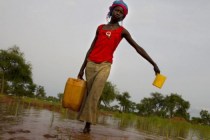
 Water is a vital natural resource for human existence and survival. As important as it is, water is becoming scarcer and competition between users is growing with significant gender difference in use, access and management of the resource. In many cases, gender discriminatory practices can limit people chances to access this essential resource, by placing restrictions on their independence. These unfair practices often marginalize the contribution of disadvantaged groups (women and girls) to society and reduce the benefits of development. For example, In Africa, it seems like a culture, that women and children are the primary collectors, users, and managers of household water. When there is a water system failure, the women and children are the ones who are most affected, since they then have to travel far to search for water for household use. Similarly, when the need for water management arises, women should be the key players in implementing changes in efficient and sustainable water projects. However, despite the experience and knowledge they bring to water management, the contribution and roles of women are still often under-utilized in water and sanitation policies.
How does Gender impact Water Management?
Mainstreaming gender in water management brings benefits for water resource use and environmental sustainability. It helps improve efficiency of water use because those who are the direct beneficiaries are given the opportunity to participate in decision making thereby ensuring suitability and sustainability of water projects. Higher participation of women in the location of where water facilities should be placed is significantly associated with improved water supply to households, which consequently reduces the hours women and girls spend travelling to fetch water for their households.
Are there still gaps in women’s role in water management?
Women’s role in the management of water has been increasingly acknowledged by development agencies, policymakers, national governments and non-governmental organizations. But despite this recognition, evidence shows a wide gap which is the lack of progress due in part to the complete absence of gender dis-aggregated data. Notwithstanding, the most troubling information is the fact that there is a huge possibility that climate change will make collecting water increasingly burdensome and more regions will experience water shortages, as rainfall becomes erratic, glaciers melt and sea rise. As it takes more time to collect water and wood, the available time for girls education or other economic and political activities will decrease. Already, the majority of children worldwide who do not attend school are girls, and women representing 2/3 of the illiterate population in the world.
How effective can gender mainstreaming in water management be?
Gender mainstreaming was mainly adopted to effectively deal with the issue of marginalization and failure of specific projects to bring about significant changes in women’s status. This idea was intended to overcome this marginalization and to bring gender equality issues into the center of developmental activities. Even with all the efforts and attention given to gender mainstreaming, moving forward to achieve the post 2015 sustainable development goals (5&6) and targets on the availability and sustainable management of water and sanitation; and Gender equality and the empowerment of all women and girls will require a sense of renewed commitment, promoting gender-sensitive participation and most importantly, it will require focusing on poverty reduction and economic development in places such as Africa. Gender mainstreaming in water sector and sustainable and well-managed water supplies are essential to achieving access to water for all, and for ensuring the maintenance of water resource in the interest and needs of future generations.


Leave a comment